

SCANOLOGY has just introduced NimbleTrack Gen2. With upgraded technology, SCANOLOGY's NimbleTrack Gen2 is capable of scanning large and complex areas significantly faster, while maintaining measurement-level accuracy. This is the next generation of the company's mobile optical tracking and 3D scanning systems. SCANOLOGY's NimbleTrack Gen2 is designed to deliver higher performance, especially in speed and measurement range.
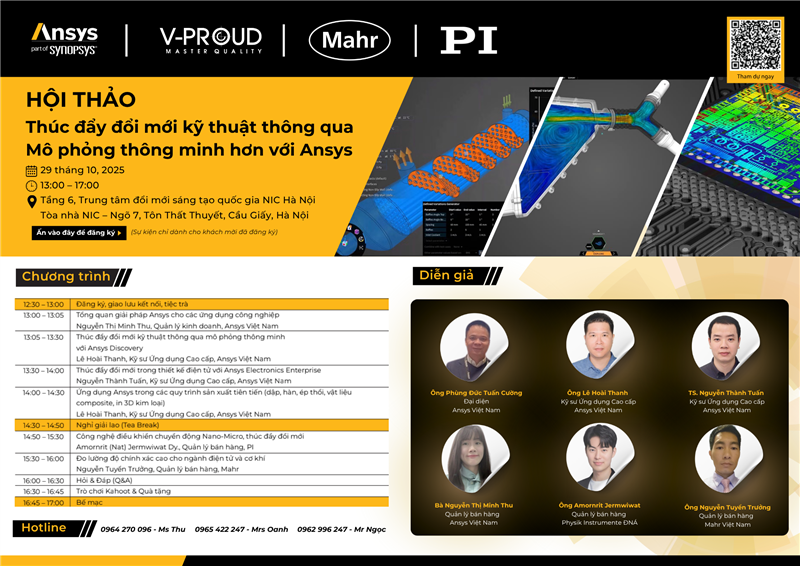
A breakthrough opportunity for R&D processes awaits the Vietnamese engineering community. The specialized workshop "Driving Engineering Innovation Through Smart Simulation" organized by ANSYS will take place on October 29, 2025, at the Innovation Hub Building, updating the latest advanced simulation solutions for the manufacturing, electronics design, and Nano-Micro industries.
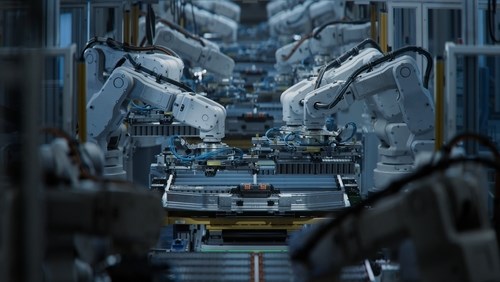
In the global race to automate manufacturing, China is emerging as a pioneer with the “dark factory” model – where robots and artificial intelligence completely replace humans. Requiring no light or rest, the new generation of factories operate continuously 24/7 with superior precision and efficiency.
In the realm of modern manufacturing, jigs and fixtures play a pivotal role in ensuring the accuracy, repeatability, and efficiency of production processes. Traditional methods in designing and manufacturing jigs & fixtures often encounter certain challenges, including time-consuming manual measurements and the potential for errors..
The use of the Scantech 3D scanner to collect accurate data on parts to be fixed involves a meticulous process to ensure the reliability and completeness of the data. First, the part to be fitted is prepared for scanning, ensuring that the surface is clean and unobstructed. Then, a technician uses the scanner to record the shape and dimensions of the part. Scantech offers a variety of scanners with different technologies such as laser scanning, structured light, infrared laser, and blue laser, allowing users to choose the device that best suits the specific requirements of the part and application. For example, an infrared laser can be used to quickly scan large areas, while a blue laser is ideal for collecting fine details.
A notable advantage of Scantech scanners is their ability to handle a wide range of materials, including reflective and dark surfaces, without the need for complex preparation steps such as applying a special coating. This helps save time and effort during the scanning process. The data acquisition speed of Scantech scanners is also very impressive, with many models capable of measuring millions of points per second, helping to complete the scanning of a complex part in a short time. The scanning process typically involves moving the scanner around the part to collect data from all angles, creating a detailed 3D point cloud or mesh model of the part.
The 3D scan data obtained from the Scantech scanner serves as the foundation for designing and manufacturing jigs & fixtures with superior precision. Typically, this data (in the form of a point cloud or mesh model) is imported into CAD (Computer-Aided Design) software to create or modify a 3D model of the part. This process is often referred to as reverse engineering, where scan data is used to recreate the exact shape and dimensions of the part in a digital environment.
By using accurate scan data, design engineers can create jigs & fixtures with shapes and dimensions that perfectly match the part to be fixed, significantly reducing errors and gaps. This is especially important for parts with complex shapes or high accuracy requirements. Furthermore, the scan data can be used to identify existing errors or deformations on the part, allowing for the design of jigs & fixtures that accommodate these specific characteristics. Integrating 3D scan data into the design process helps create customized and precise jigs & fixtures, capable of eliminating the need for time-consuming trial and adjustment.
The high accuracy of the Scantech 3D scanner, with the ability to achieve accuracy up to 0.020 mm, brings many significant benefits in jig & fixture design and manufacturing. One of the main benefits is the significant reduction of errors in both the design and manufacturing processes. Accurate scan data helps engineers create virtual jig & fixture models that perfectly match the real part, thereby minimizing assembly and functional issues later on.
In addition, 3D scanning technology also helps to significantly save adjustment time. With traditional methods, the design and manufacture of jigs & fixtures may require multiple trials and adjustments to ensure proper fit. However, precise 3D scan data allows manufacturers to skip many of these iterative steps, as the design model is already based on actual measurements. Rapid data collection and optimized design processes also contribute to shortening the overall production time. Moreover, the reduction of errors and adjustment time also leads to lower material and labor costs, bringing higher economic efficiency.
Not only useful in the design phase, 3D scan data also plays an important role in inspecting and ensuring the quality of jigs & fixtures after they are manufactured. By scanning the completed jigs & fixtures and comparing the scan data with the original CAD model, manufacturers can verify whether they meet the design specifications.
3D scan data analysis software, such as Scantech's ScanViewer or DefinSight, or third-party software like Geomagic Control X, Verisurf, PolyWorks, and GOM Inspect, allows users to create color maps and perform deviation analysis to visualize any differences between the actual jig & fixture and the design model. Another significant benefit is the ability to perform on-site inspections using portable Scantech scanners, eliminating the need to move large and heavy jigs & fixtures to a metrology lab. This saves time and costs while allowing for quick feedback on product quality.
V-Proud is the exclusive distributor of Scantech 3D Scanners. Contact us today to experience and get a product demo of Scantech.
V-PROUD JOINT STOCK COMPANY
Address: Lot A-23 Xuan Phuong Garden, Phuong Canh Ward, Nam Tu Liem District, Hanoi
Hotline: 0896 665 247
Email: xinchao@v-proud.vn

(84) 896 555 247
 Tiếng Việt
 English